Table of Contents
F. is renowned for his discovery of operant conditioning the idea that our actions can be formed by contingencies (what comes before and after). A vital part of these psycho therapists' study discovered how anxieties are found out. These ideas were applied scientifically as 'behavior modification' by luminaries including Joseph Wolpe and came to be the foundation of anxiety decrease techniques that are still in usage today.
Aaron T. Beck is accountable for the advancement of the type of CBT that is most commonly exercised today. No background of CBT is total without reference of Albert Ellis that was likewise developing a type of cognitive therapy at the exact same time as Beck. Ellis' work ended up being Reasonable Stirring Behavior Modification (REBT) and shares many similarities with CBT.
Beck developed cognitive treatment. Working with clinically depressed clients he located that they experienced streams of negative ideas which he called 'automated ideas'.
Forms of Anxiety Disorders
There is substantial overlap between both strategies yet it is perhaps Beckian cognitive treatment that has been more influential. CBT has an empirical position which indicates that it has actually transformed and created with the introduction of brand-new clinical discoveries and academic breakthroughs. Numerous clinicians and scientists trained with Beck and Ellis and have given that taken place to train succeeding generations of specialists, scientists, and scientist-practitioners.
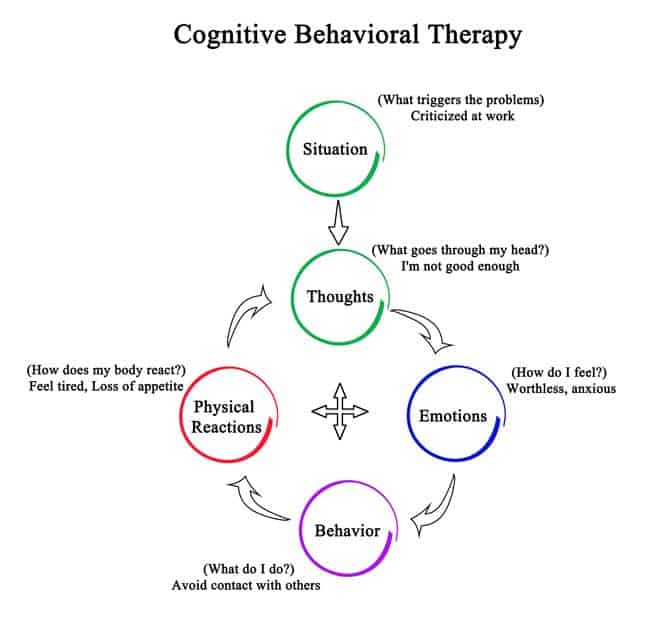
DBT combines cognitive behavioral methods with conscious understanding and distress resistance methods. Compared to traditional CBT, ACT places less focus on altering (managing) the content of one's thoughts, and even more emphasis on the partnership that we have with our ideas.
Metacognitive treatment was developed by Adrian Wells. MCT focuses on the ideas that individuals have concerning their very own ideas, and about exactly how their own mind works their metacognitive ideas.
A timeline of what came in the past and after Beck and Ellis' cognitive behavior modification. Therapists that practice mental treatments are educated to focus on certain aspects of an individual's experience and to react in specific ways. We can state that every therapy has a various 'stance'. For instance, systemic therapists are educated to focus on the means people connect to each other and on how a specific reacts to the actions of various other individuals in their network.
How Prioritizing In Mental Health Changes Everything
Psychodynamic specialists are educated to observe how patterns from very early (add-on) relationships are played out in an individual's later partnerships. Some important buildings of CBT's stance are that: CBT theory says that the here-and-now is where our discomfort and suffering lies: if we fear we really feel the anxiety currently, and if we are clinically depressed our sensations of despair or loss are happening currently.
CBT does pay close focus to our personal backgrounds since recognizing the beginning of problems, beliefs, and analyses is often vital to making sense of them. That claimed, the problems are triggering pain and suffering in the existing and this is where we have the power to make changes and so the focus of CBT will frequently return to the present moment.
Sensitive Care with Depression Therapy: When It Makes a Difference
When they collaborate a customer and CBT specialist will certainly attempt to find to a shared understanding of a trouble and, improving that understanding, believe of ways to attend to the trouble (a procedure called instance formulation). CBT also advertises a reasonable method to reasoning: the goal is not to 'think delighted thoughts' but also for our believing to be balanced and exact.

One sense in which CBT's strategy is empirical is that therapies are grounded forthcoming about what works. Several CBT therapies have been compared to other therapies in large randomized controlled trials (RCTs). These resemble the means in which medicines are tested for efficiency. These research studies have shown effectively that CBT is an effective therapy for a wide array of problems.
CBT is also empirical in the sense that progress within treatment is kept an eye on, with the specialist and client carefully observing what is working and what isn't. On a broad degree they could check signs and symptoms session-by-session and anticipate to see enhancement in time. On a finer degree they will certainly gauge things like: Just how a lot a customer counts on a certain idea.
Autism Spectrum Testing: Professional Assessment Protocols
Just how nervous a client really feels prior to and after an experiment. CBT specialists resolve performing treatment that is collective. They will go for treatment to feel like a journey of exploration where the therapist is 'beside' the customer as opposed to one where the therapist is positioned as an expert.

Navigation
Latest Posts
Coverage & Access for Therapy Care through Parenting counseling
EMDR Therapy in Treating Traumatic Memories
Systemic Support: Improving Together